
Deal Memory vs CRM Data: Why Handoffs Break Enterprise Deals

Key takeaways
- Traditional CRMs fail the 'ownership change stress test' because they store activity logs but lose the underlying deal reasoning.
- In enterprise sales, the deal narrative (the chain of assumptions and stakeholder dynamics) is more predictive than static fields.
- AI-native CRM turns scattered signals into persistent, searchable memory that survives account handoffs and multi-quarter cycles.
- Preserving deal memory prevents 'discovery debt'—ensuring customers don't have to repeat decisions they already made.
Every complex deal accumulates context.
Why the champion believed this mattered. Which objections were quietly deprioritized. Who influenced the economic buyer. What trade-offs were accepted to keep momentum.
That context shapes every decision.
And in most organizations, it disappears.
The Ownership Change Stress Test
The easiest way to understand the limits of traditional CRM is to watch what happens when a rep leaves mid-cycle.
A new account executive opens the opportunity and finds:
- Current stage
- Meeting history
- Contact list
- Notes scattered across activities
- Forecast category
The data is there.
The reasoning is not. This is why most deal-critical context dies in conversations before it can ever be operationalized.
Why was this stakeholder central? What concern was deprioritized but not resolved? Which executive was skeptical? What caused momentum to accelerate two months ago?
The replacement rep has to reconstruct the deal from fragments.
That is where momentum is lost.
Data Without Narrative
Traditional CRM was built to answer reporting questions.
What is in pipeline? What stage is the deal in? When is it expected to close?
It was not built to preserve the evolving narrative of the deal.
In enterprise sales, narrative matters more than static fields.
The opportunity is not just a record. It is a chain of assumptions, stakeholder dynamics, and unresolved risks. While traditional CRMs track seller activity, they often miss the internal narrative that actually drives the decision.
When that chain is broken, teams start over.
How Deal Memory Actually Gets Lost
Critical context usually lives in places that are hard to operationalize.
- Rep intuition
- Call recordings
- Email threads
- Slack conversations
- Executive debriefs
Each source contains part of the story.
None of them become a structured, searchable memory that survives handoffs.
As deals extend across quarters, institutional memory decays.
The CRM still looks complete.
The commercial understanding is incomplete.
What AI-Native CRM Changes
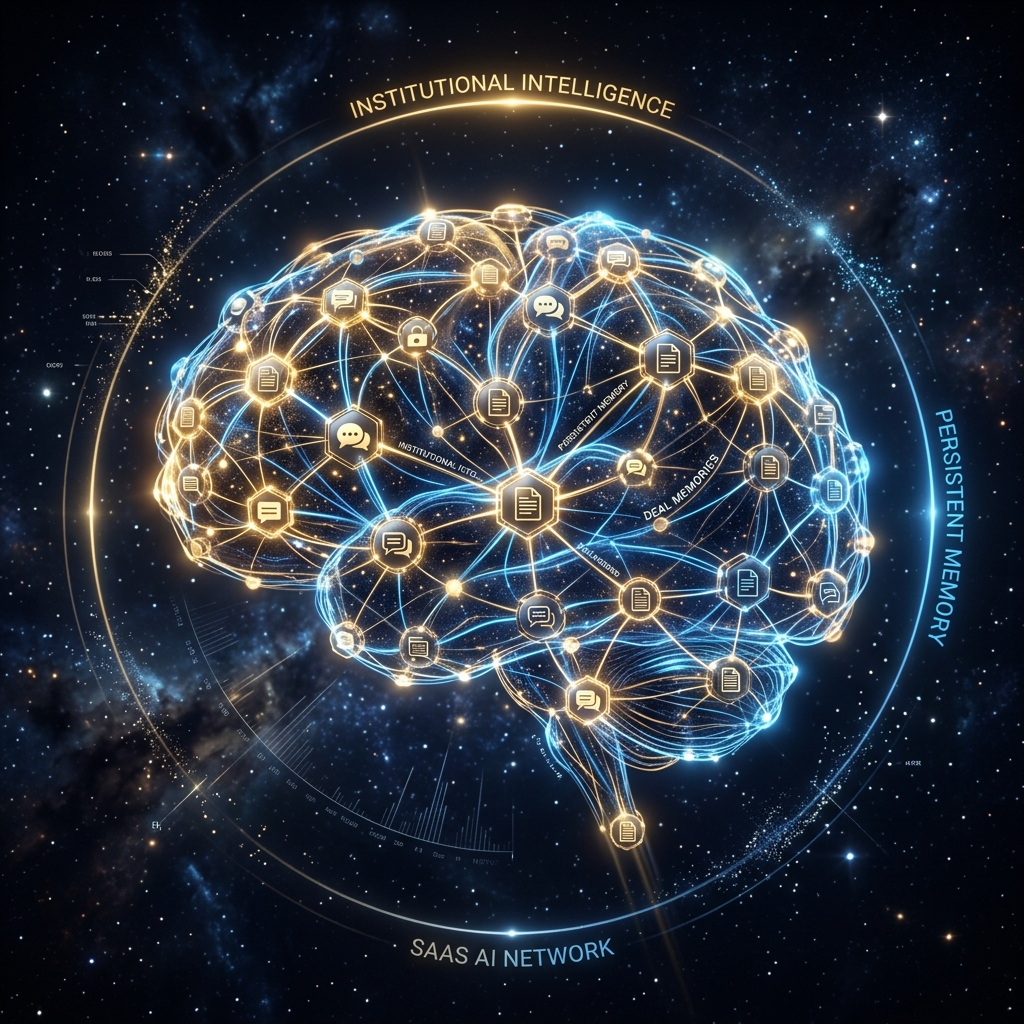
AI-native CRM turns conversations and interactions into persistent deal memory.
Instead of storing only fields and notes, it continuously captures:
- Stakeholder influence patterns
- Objections and how they evolved
- Decision criteria
- Competitive dynamics
- Strategic assumptions
- Changes in consensus
The system does not just record what happened.
It preserves why the team made specific decisions. It shifts the system from a repository to a true layer of institutional memory.
That context remains available even when:
- Ownership changes
- Deals span multiple quarters
- Leadership joins late
- Teams expand across functions
Traditional CRM vs. AI-Native CRM
| Traditional CRM | AI-Native CRM | | ------------------------------ | --------------------------------------------- | | Stores activities | Preserves deal narrative | | Captures current fields | Tracks evolving assumptions | | Depends on manual notes | Builds structured memory automatically | | Loses context during handoffs | Maintains continuity across ownership changes | | Reports status | Explains why status changed | | Resets institutional knowledge | Compounds institutional knowledge |
Why Deal Memory Matters Operationally
When context survives, teams execute differently.
New reps ramp faster. Managers coach with historical reasoning. Executives engage with accurate context. Forecasts become more reliable. This is possible because the system understands how buying decisions are actually made. *Also read: Confidence Is Not Evidence: Why Commit Deals Miss the Forecast*
Most importantly, the buying experience remains consistent.
The customer does not have to repeat decisions they already made.
That alone can preserve trust in a competitive process.
CRM as Institutional Memory
For decades, CRM has functioned as a system of record.
The next generation will function as a system of memory.
That is a fundamental shift.
Instead of asking reps to document the past, AI-native CRM continuously captures the commercial intelligence that teams need to act in the present.
The organizations that adopt this model will not just have cleaner data.
They will retain what has always been most fragile in enterprise sales.
The reasoning behind the deal.
FAQs
Common questions
What is the 'ownership change stress test'?
It is a test of how much momentum is lost during a rep transition. If the system only stores activity but not reasoning, the new rep must restart discovery, often stalling the deal.
Why is deal narrative more important than static fields?
Fields like 'stage' are lagging indicators. The narrative—the 'why' behind stakeholder skepticism or specific trade-offs—explains the actual deal health and unresolved risks.
How does AI-native CRM capture deal memory?
It continuously analyzes meetings, emails, and interactions to extract evolving assumptions, decision criteria, and stakeholder influence without relying on manual data entry.
Does preserving deal memory improve the buyer experience?
Yes. It ensures that the customer never has to re-explain their pain points or re-verify previous decisions, maintaining trust and professional continuity.
Related reading
Continue exploring deal execution
Confidence Is Not Evidence: Why Commit Deals Miss the Forecast
Why commit deals often miss the forecast and how organizations can shift from subjective seller confidence to objective buyer-side milestones for accuracy.
CRM Stage Movement vs the Real Buyer Decision Process
Stage movement can hide how a buying decision is actually being made. Learn how to separate CRM progress from buyer-side alignment.
Decision Ownership in B2B Sales: Why Deals Stall Without an Internal Owner
Enterprise deals stall when everyone participates but no one owns the buying decision. Learn how decision ownership risk shows up in real deals.
Hidden Stakeholders in B2B Buying Groups: The Mapping Problem
Hidden stakeholders create late-stage objections because they were never mapped early. Learn how buying group blindness derails enterprise deals.
Deal Risk Detection: How to Move Beyond Happy Ears
Happy ears hide forecast risk. Learn how to detect deal risk using stakeholder behavior, silence, momentum loss, and buyer-side progress signals.